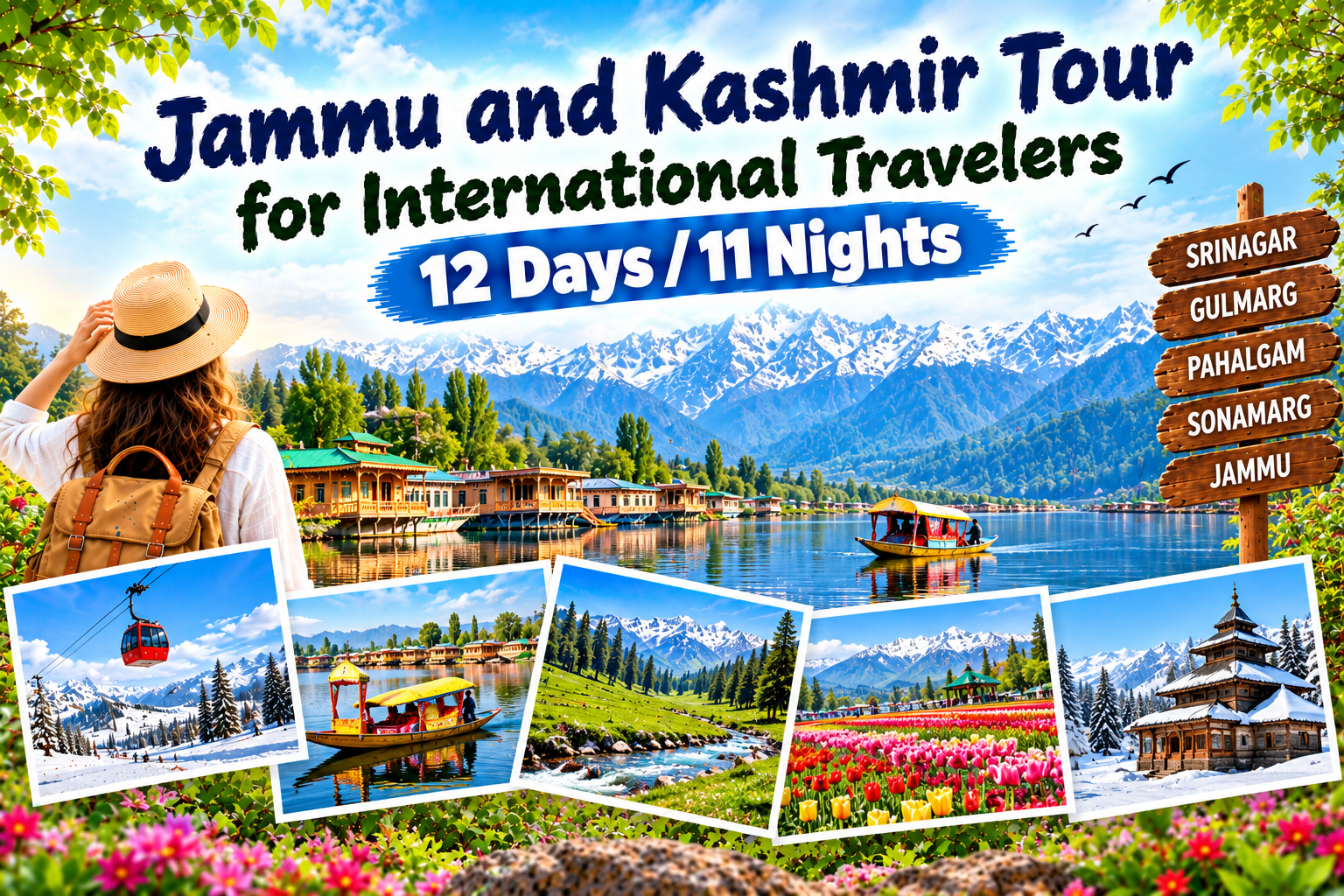
Experience the spectacular landscapes, cultural heritage and spiritual traditions of northern India with this 12-day Jammu and Kashmir tour for international travelers.

itinerary
Jammu and Kashmir Tour for International Travelers | 12 Days
Tour Overview & Highlights
Detailed Day-by-Day Itinerary
ITINERARY
Tour Highlights & Steps
Tour Overview
Experience the spectacular landscapes, cultural heritage and spiritual traditions of northern India with this 12-day Jammu and Kashmir tour for international travelers. From the peaceful waters of Dal Lake in Srinagar to the alpine meadows of Gulmarg, the scenic valleys of Pahalgam and the mountain landscapes of Sonamarg, this itinerary showcases some of the region's best-known destinations.
Enjoy a traditional shikara ride on Dal Lake, explore Srinagar's famous gardens and local markets, admire the Himalayan scenery around Gulmarg and Pahalgam, and discover Sonamarg's mountain vistas when seasonal road access permits. The journey concludes in Jammu and Katra, offering time for the pilgrimage to Shri Mata Vaishno Devi Shrine.
Designed for international visitors seeking nature, culture, photography and spiritual experiences, this tour combines scenic sightseeing with comfortable overnight stays and time for relaxation.
Tour Details
• Duration: 12 Days / 11 Nights
• Destinations Covered: Srinagar – Dal Lake – Gulmarg – Pahalgam – Sonamarg – Jammu – Katra – Vaishno Devi
• Tour Type: Mountain Holiday, Nature, Culture and Spiritual Tour
• Ideal For: International travelers, couples, families, nature lovers, photographers and spiritual travelers
• Starting Point: Srinagar International Airport
• Ending Point: Jammu Airport or Jammu Tawi Railway Station
• Travel Style: Private road transfers with optional guided sightseeing
• Recommended Season: April to October for many mountain excursions; winter visits are possible with weather-dependent adjustments
Day-by-Day Itinerary
ITINERARY
Day 1: Arrival in Srinagar
Arrive at Srinagar International Airport and transfer to your hotel or houseboat. After check-in, take time to relax and adjust to the mountain environment.
Depending on your arrival time, enjoy a leisurely walk along the Dal Lake boulevard or explore a local market featuring Kashmiri handicrafts, traditional textiles and souvenirs.
Spend the evening enjoying the peaceful atmosphere of Srinagar and preparing for the days ahead.
Overnight Stay: Srinagar
ITINERARY
Day 2: Dal Lake and Srinagar Sightseeing
After breakfast, visit Dal Lake, one of Srinagar's most recognizable attractions. Enjoy a traditional shikara ride, subject to weather and operating conditions, and admire the lake's houseboats, surrounding mountains and floating gardens. <Cite refs={["turn320338search0","turn320338search11"]}/>
Continue to Srinagar's Mughal gardens, such as Nishat Bagh and Shalimar Bagh, where landscaped terraces, fountains and mountain views reflect the region's historic garden traditions.
Depending on your interests and the time available, you may also visit a local handicraft centre or explore the old city's cultural landmarks.
Overnight Stay: Srinagar
ITINERARY
Day 3: Srinagar Heritage and Leisure
Enjoy breakfast before exploring more of Srinagar at a relaxed pace.
Visit selected city attractions, which may include Hazratbal Shrine, historic neighbourhoods or additional gardens, subject to opening hours and local conditions. Travelers interested in Kashmiri culture can explore traditional crafts, local markets and regional cuisine.
The afternoon is free for photography, shopping or relaxation by the lake. Optional experiences can be arranged according to your interests.
Overnight Stay: Srinagar
ITINERARY
Day 4: Srinagar to Gulmarg
After breakfast, travel by road to Gulmarg, a renowned mountain resort known for its meadows, Himalayan views and seasonal outdoor activities. The official tourism information identifies Gulmarg as one of the region's major scenic destinations. <Cite refs={["turn320338search3","turn320338search5"]}/>
After checking in, enjoy the surrounding landscape and take a leisurely walk where conditions permit.
The Gulmarg Gondola cable car may be available as an optional experience, subject to operating schedules, weather and ticket availability. Winter visitors may encounter snow-based activities, while warmer months offer meadows and mountain scenery.
Overnight Stay: Gulmarg
ITINERARY
Day 5: Gulmarg to Pahalgam
Enjoy breakfast and depart for Pahalgam, a picturesque destination surrounded by forested hills and the Lidder River. The journey takes several hours, depending on traffic, road conditions and any sightseeing stops.
On arrival, check in to your hotel and enjoy the natural surroundings. Spend the afternoon exploring the town, walking near accessible riverfront areas or relaxing at your accommodation.
Pahalgam is known for its scenic landscapes and opportunities for outdoor exploration. <Cite refs={["turn320338search10","turn320338search11"]}/>
Overnight Stay: Pahalgam
ITINERARY
Day 6: Pahalgam Valley Excursion
After breakfast, explore the scenic surroundings of Pahalgam. Depending on current local access arrangements, weather and available transport, optional excursions may include Betaab Valley, Aru Valley or other permitted viewpoints.
Enjoy the mountain scenery, forested slopes and riverside landscapes. Short walks and photography stops can be arranged to match your group's fitness and interests.
Some valley roads and local sightseeing areas may require authorized local vehicles or separate transport arrangements. Confirm the day's route with your local operator before departure.
Return to your hotel for a relaxed evening.
Overnight Stay: Pahalgam
ITINERARY
Day 7: Pahalgam to Srinagar
After breakfast, check out and travel back to Srinagar. Enjoy the changing scenery along the route and make short stops where appropriate.
After arrival, check in to your hotel or houseboat. The rest of the day is free for leisure, shopping or a relaxing walk along Dal Lake.
You may also use this evening to explore Kashmiri cuisine or purchase locally made handicrafts.
Overnight Stay: Srinagar
ITINERARY
Day 8: Sonamarg Day Excursion
After breakfast, depart for Sonamarg, known for its mountain scenery, alpine landscapes and views of snow-covered peaks during suitable seasons. The route from Srinagar is scenic, but travel time and access depend on road and weather conditions. <Cite refs={["turn320338search2","turn320338search3"]}/>
Spend time enjoying accessible viewpoints and the surrounding valley. Depending on seasonal conditions and local permissions, optional activities may include a pony excursion or a visit towards the Thajiwas Glacier area.
Sonamarg's road access can be seasonal, and some excursions require local transport. Confirm the current road status and authorized transport arrangements before travel.
Return to Srinagar in the evening.
Overnight Stay: Srinagar
ITINERARY
Day 9: Srinagar to Jammu
After breakfast, check out and begin the road journey from Srinagar towards Jammu. This is a substantial intercity transfer, and actual travel time depends on traffic, weather, road conditions and security-related restrictions.
Arrive in Jammu, check in to your hotel and relax after the journey. If time permits, enjoy a short local outing or dinner at a regional restaurant.
Keep the evening flexible rather than planning multiple attractions after the road transfer.
Overnight Stay: Jammu
ITINERARY
Day 10: Jammu to Katra
After breakfast, travel by road to Katra, the principal base town for the Shri Mata Vaishno Devi pilgrimage.
Check in to your hotel and complete the required pilgrimage registration arrangements. The Shrine Board requires pilgrims to obtain valid yatra registration before proceeding along the route. Check the official website for the latest registration process and rules. <Cite refs={["turn320338search14","turn320338search16"]}/>
Use the rest of the day to prepare for the pilgrimage, arrange suitable walking shoes and review the available facilities. Travelers who prefer assistance should check official options for approved transport or other permitted services.
Overnight Stay: Katra
ITINERARY
Day 11: Shri Mata Vaishno Devi Pilgrimage
Begin the pilgrimage from Katra to Shri Mata Vaishno Devi Shrine, following the officially designated route and current instructions.
The traditional route involves a substantial uphill journey, so allow sufficient time and assess your fitness before starting. Officially available assistance and transport options may vary, and any service should be booked through authorized channels.
After completing the pilgrimage, return to Katra and rest at your hotel. If the pilgrimage takes longer than expected, adjust the day's schedule rather than rushing.
Overnight Stay: Katra
ITINERARY
Day 12: Departure from Jammu
After breakfast, check out and transfer to Jammu Airport or Jammu Tawi Railway Station for your onward journey.
Allow adequate time for the road transfer and airport or railway station procedures. Travelers taking an international connection from another city should confirm the onward transport plan separately.
Tour Ends: Jammu
Tour Highlights
• Enjoy a traditional shikara ride on Dal Lake.
• Explore Srinagar's Mughal gardens and cultural attractions.
• Discover Gulmarg's mountain meadows and optional Gondola experience.
• Visit Pahalgam and its scenic river valleys.
• Experience Sonamarg's alpine landscapes, subject to seasonal access.
• Travel through the Himalayan scenery of Kashmir.
• Visit Jammu and Katra as part of a spiritual travel experience.
• Undertake the pilgrimage to Shri Mata Vaishno Devi Shrine.
• Combine nature, culture, leisure and pilgrimage in one extended itinerary.
Inclusions & Facilities
Package Inclusions
• Eleven nights of accommodation in selected hotels or houseboats.
• Daily breakfast at the accommodation.
• Airport pickup in Srinagar and departure transfer to Jammu.
• Private vehicle for the planned intercity transfers and sightseeing.
• Srinagar, Gulmarg, Pahalgam and Sonamarg sightseeing transfers.
• Road transfers from Srinagar to Jammu and Jammu to Katra.
• Assistance with itinerary coordination and local arrangements.
• Applicable hotel taxes and service charges where specified in the final quotation.
Note: Shikara rides, Gondola tickets, local valley vehicles, pony rides, pilgrimage-related services, entry fees and professional guide charges must be explicitly listed as included or excluded in the confirmed quotation.
Package Exclusions
• International and domestic airfare or train tickets.
• Visa fees and travel documentation expenses.
• Lunch, dinner, snacks and beverages unless specified.
• Gondola tickets, pony rides and optional outdoor activities.
• Special local transport required for particular sightseeing areas.
• Pilgrimage-related services or donations not explicitly included.
• Monument or garden admission charges where applicable.
• Travel insurance and medical expenses.
• Personal shopping, tips, laundry and incidental expenses.
• Additional hotel nights, room upgrades and early check-in or late check-out.
• Expenses caused by road closures, severe weather, security restrictions or other circumstances beyond the tour operator's control.
• Any service not specifically mentioned in the package inclusions.
Important Travel Information for International Travelers
1. Security and Travel Advisories
Jammu and Kashmir's security conditions can change. International travelers should review their own government's latest travel advice and local official advisories before booking and again shortly before departure. Follow instructions issued by local authorities and your tour operator, and remain flexible if a route or destination becomes inaccessible.
2. Mountain Roads and Seasonal Access
Mountain routes can be affected by snowfall, rain, landslides, road maintenance and temporary restrictions. Sonamarg excursions may be particularly seasonal, and access to specific viewpoints or glacier areas is not guaranteed. <Cite refs={["turn320338search2","turn320338search5"]}/>
Maintain flexibility in the itinerary and avoid making non-refundable onward arrangements that depend on a tightly timed mountain-road transfer.
3. Vaishno Devi Registration and Pilgrimage
Pilgrims must follow the current Shrine Board registration process and carry the required yatra documentation. Check official instructions before beginning the trek, and use only authorized services. <Cite refs={["turn320338search14","turn320338search16","turn320338search17"]}/>
The pilgrimage involves a substantial uphill walk. Older travelers and visitors with mobility limitations should evaluate their needs in advance and confirm the availability and suitability of official assistance options.
4. Weather and Clothing
Weather varies considerably by altitude and season. Carry warm layers even during warmer months, particularly for Gulmarg, Pahalgam and Sonamarg. In winter, snow and icy conditions may affect sightseeing and transport.
Comfortable walking shoes, rain protection, sun protection and clothing suitable for changing mountain temperatures are recommended.
5. Health and Altitude
Allow enough time for rest after long road transfers and avoid strenuous activities if you feel unwell. Travelers with health or mobility concerns should seek appropriate professional advice before undertaking strenuous walks or the Vaishno Devi pilgrimage.
6. Local Transport and Optional Activities
Some destinations have local transport rules, and access to particular valleys or viewpoints may require an authorized vehicle. Confirm these arrangements in advance. Cable-car services, pony rides and other outdoor activities depend on operating schedules, safety rules and weather conditions.
7. International Documents and Payments
Carry a valid passport and appropriate Indian visa or travel authorization. Check whether your nationality or travel status requires any additional permissions for specific areas.
Keep accommodation confirmations and onward travel details accessible. Carry a suitable payment card and some Indian currency for smaller purchases and local expenses.
8. Responsible and Respectful Travel
Respect local customs and religious practices, follow photography rules at shrines and other sensitive locations, and avoid littering in mountain environments. Use registered local guides and authorized service providers where required.
Best Time to Visit Jammu and Kashmir
April to October is often preferred for a broad Kashmir sightseeing itinerary, although conditions differ across destinations and altitudes.
• March to April: Spring landscapes and gardens, with temperatures that can still be cool.
• May to June: Often suitable for meadow visits and many road excursions, depending on snow conditions.
• July to September: Green landscapes, but rain can affect roads and outdoor plans.
• October: Autumn colours and cooler weather, with shorter daylight hours.
• November to February: Winter scenery and possible snow activities, but road access and outdoor excursions may be disrupted.
These are general seasonal guidelines rather than guarantees. Check current forecasts, road status and official advisories before confirming travel dates.